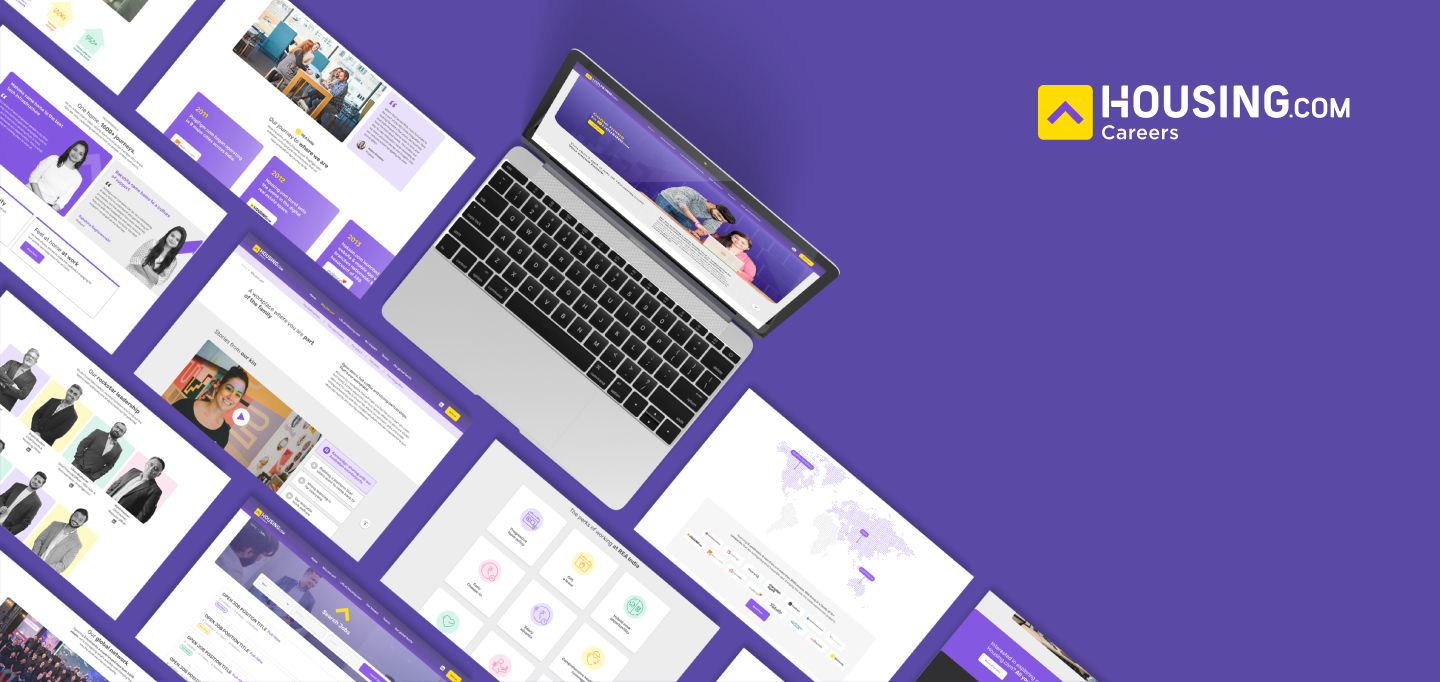

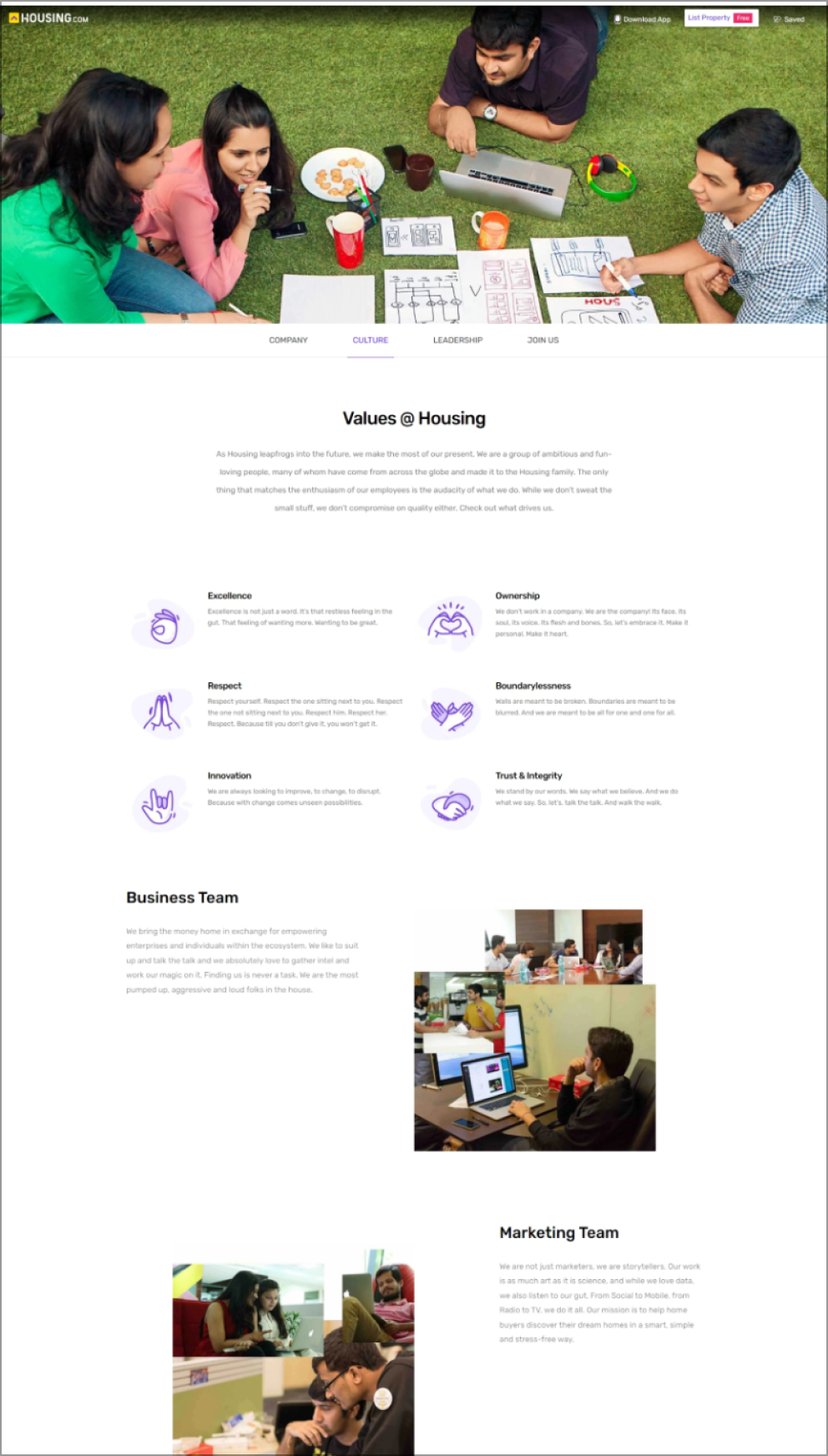
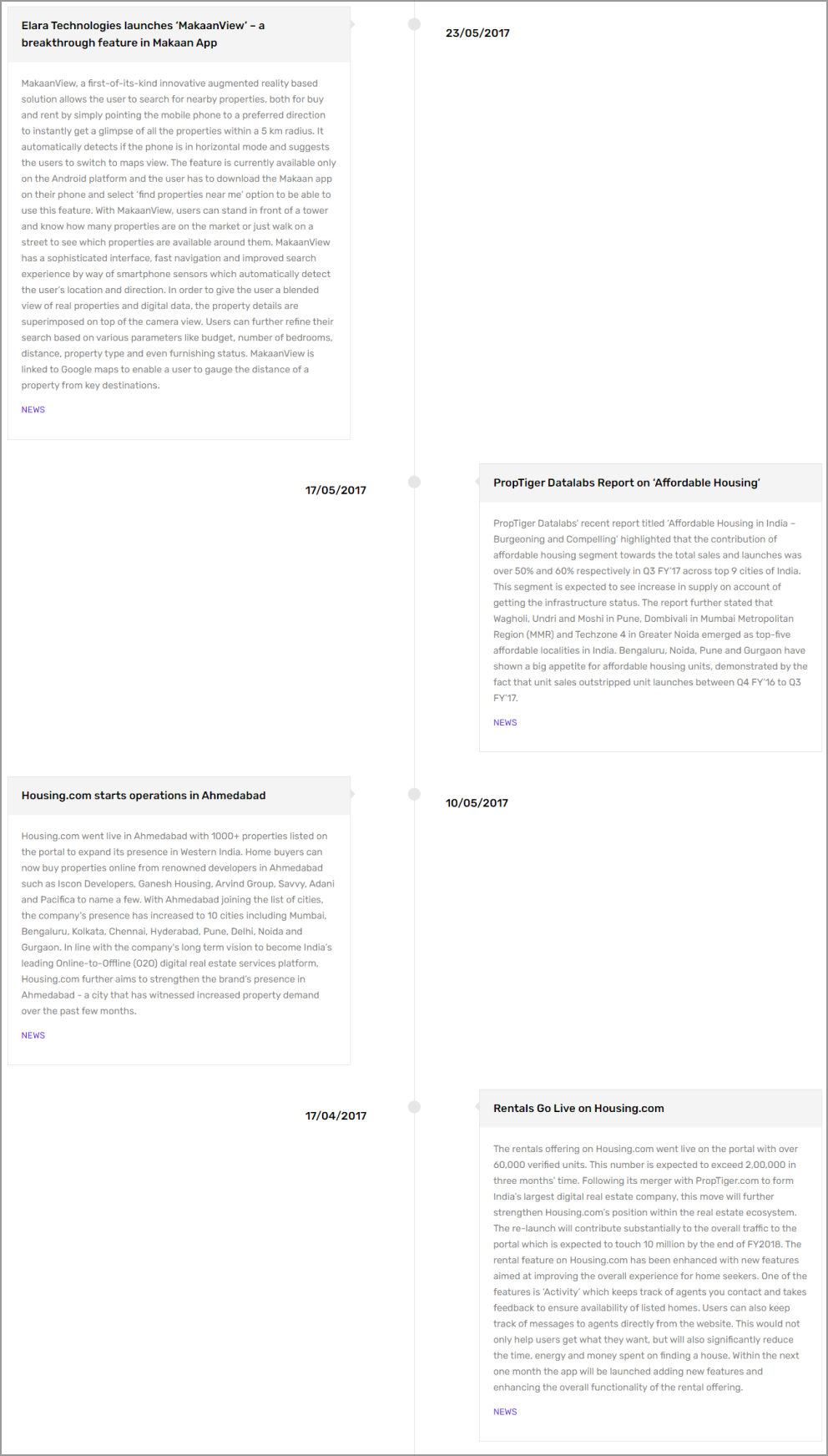
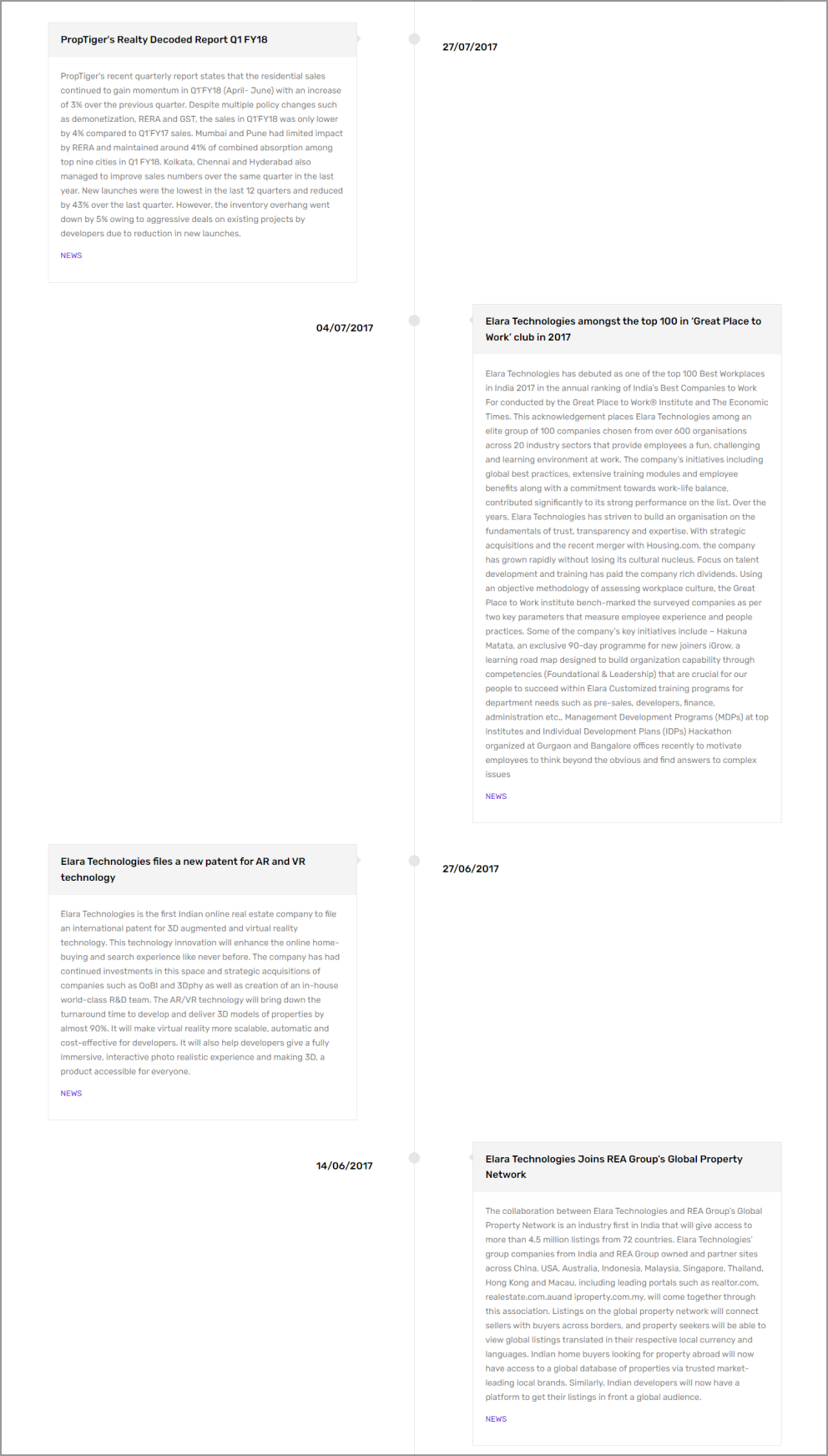
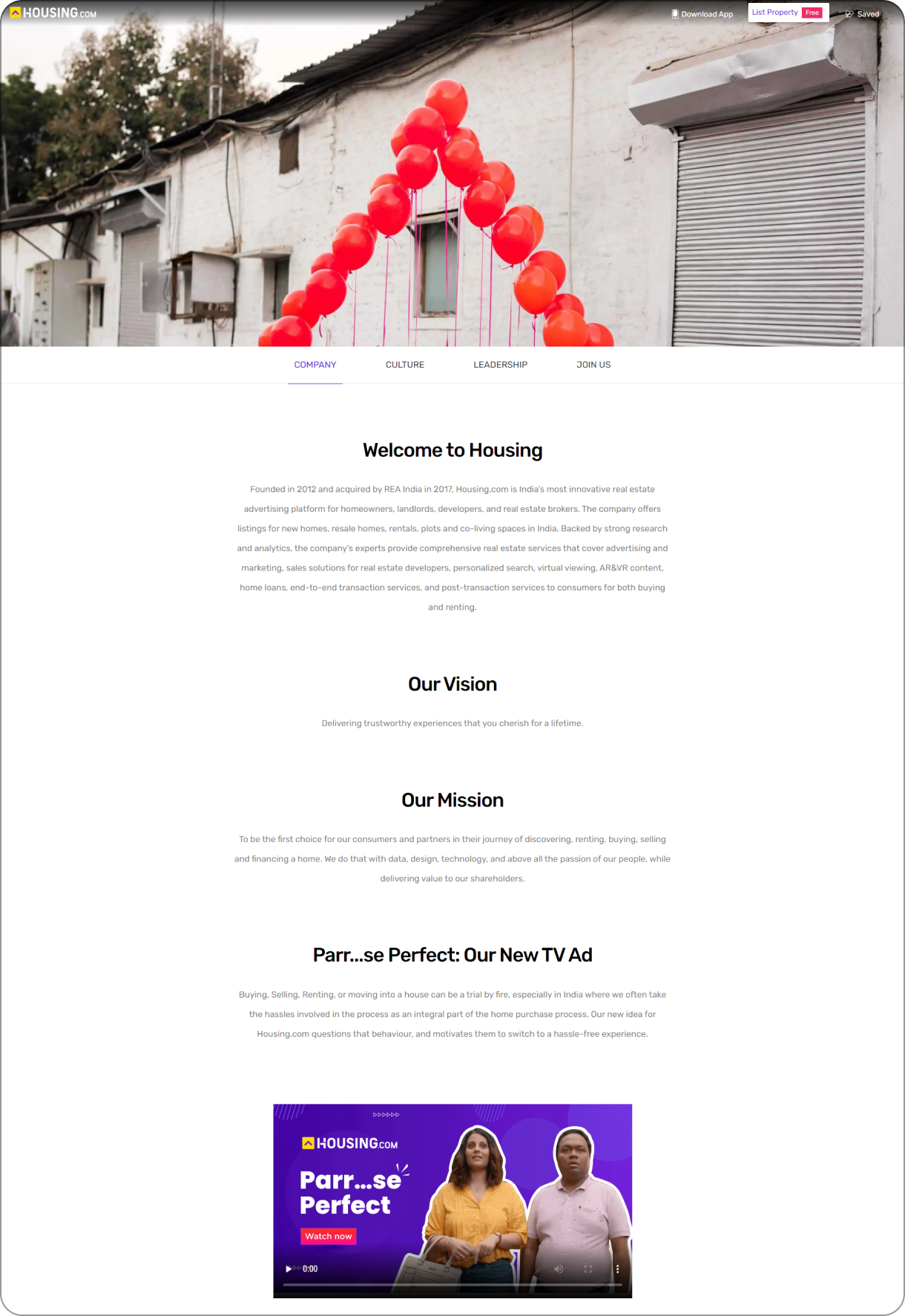
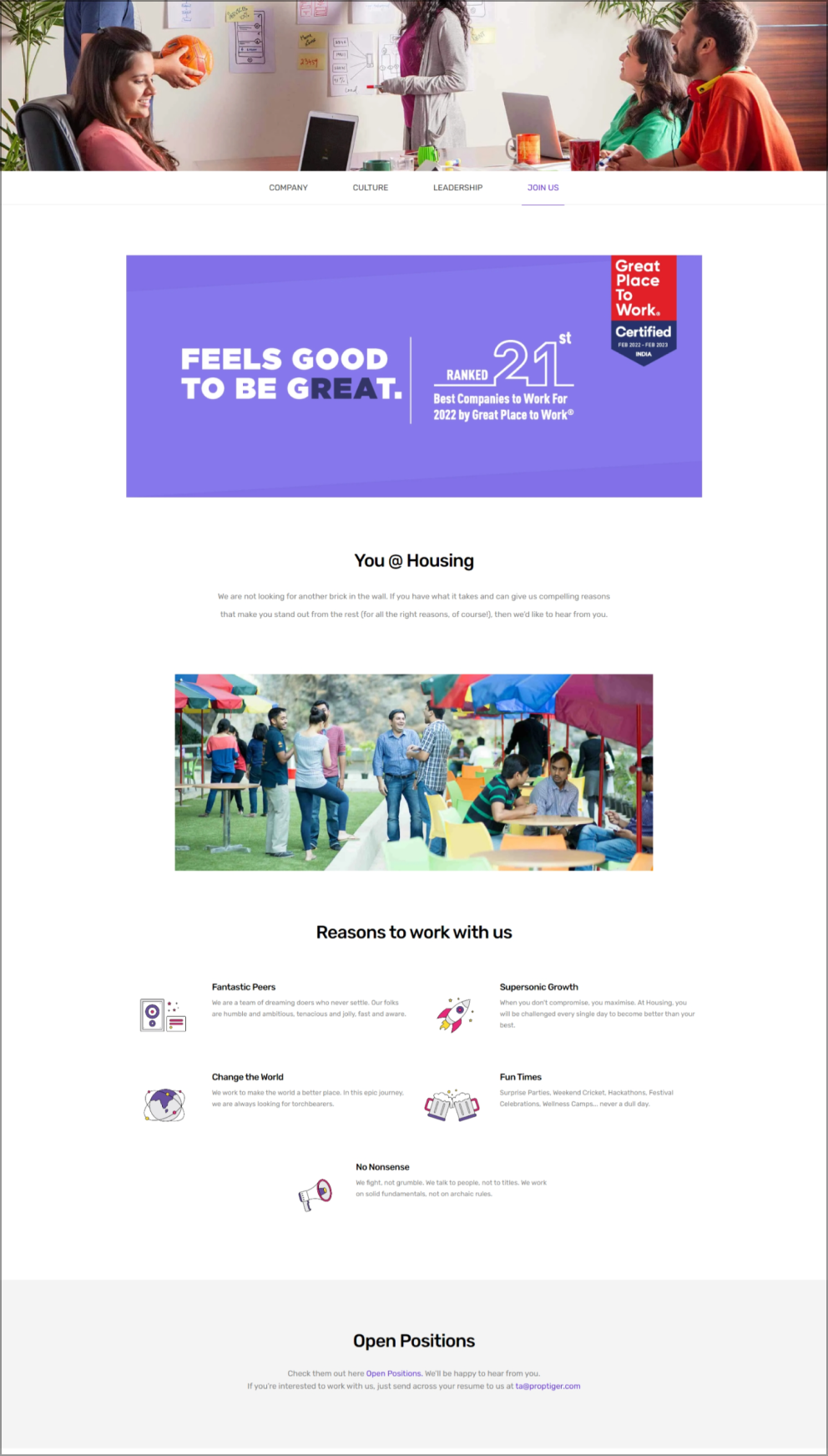
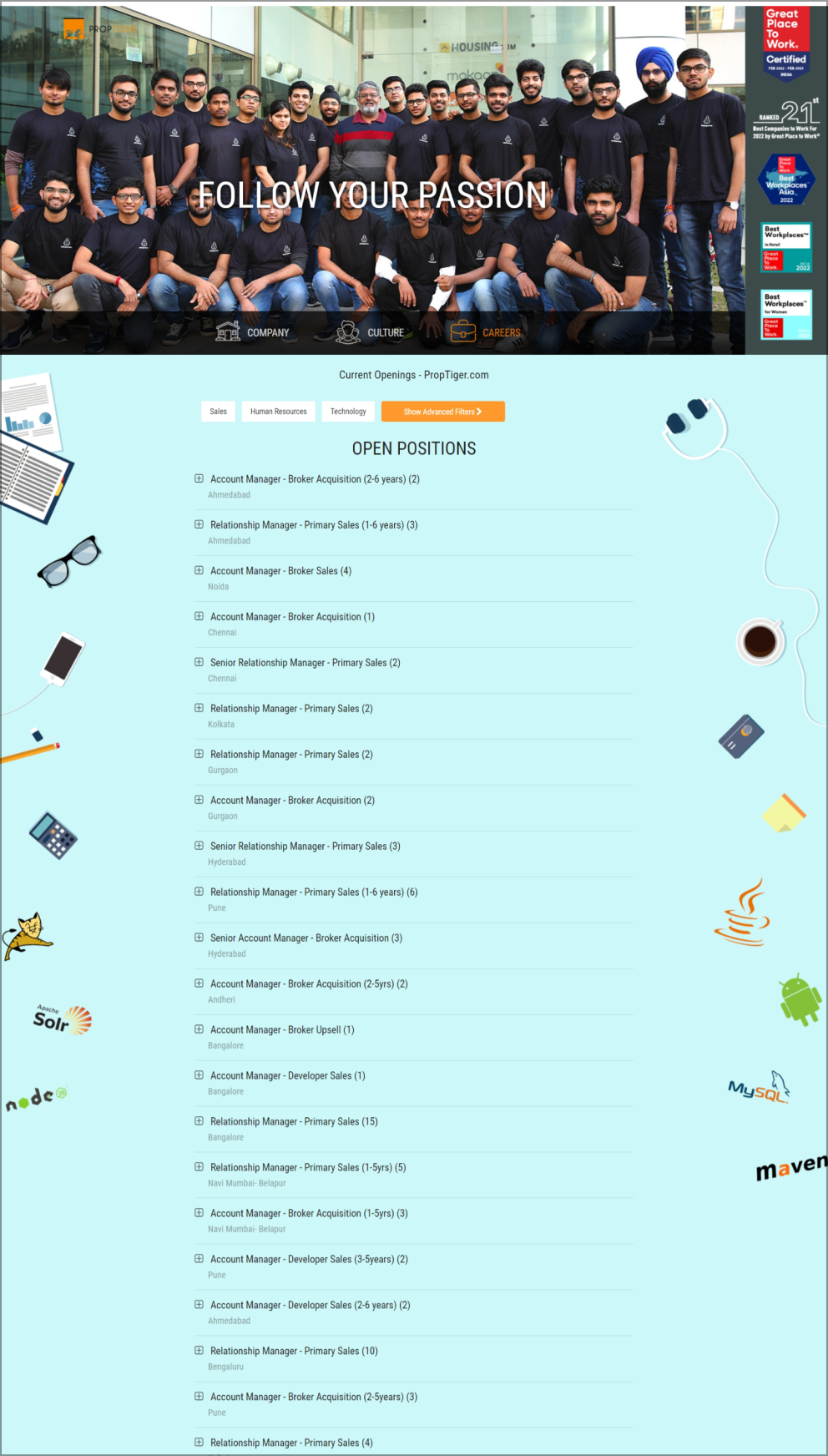
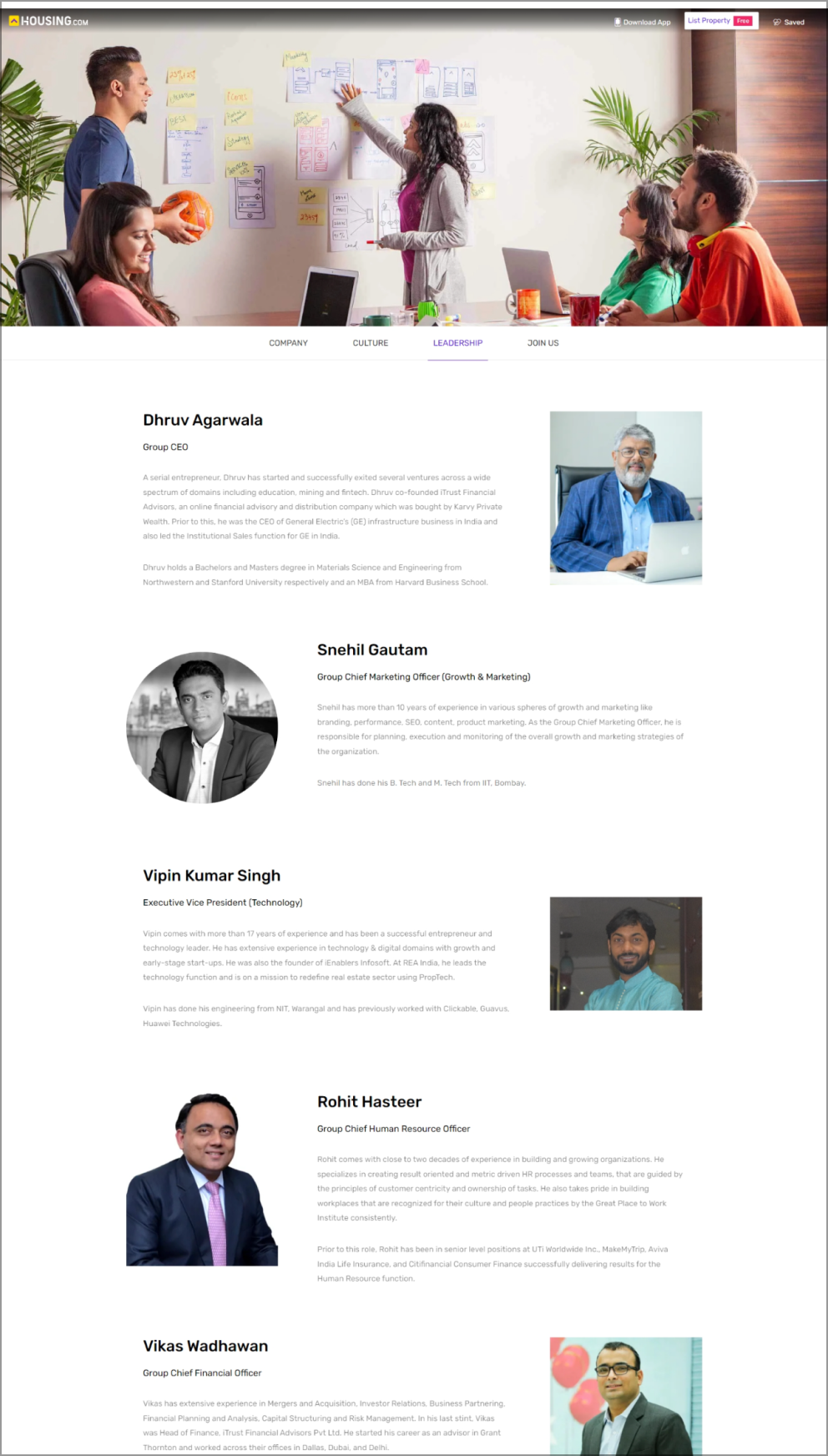
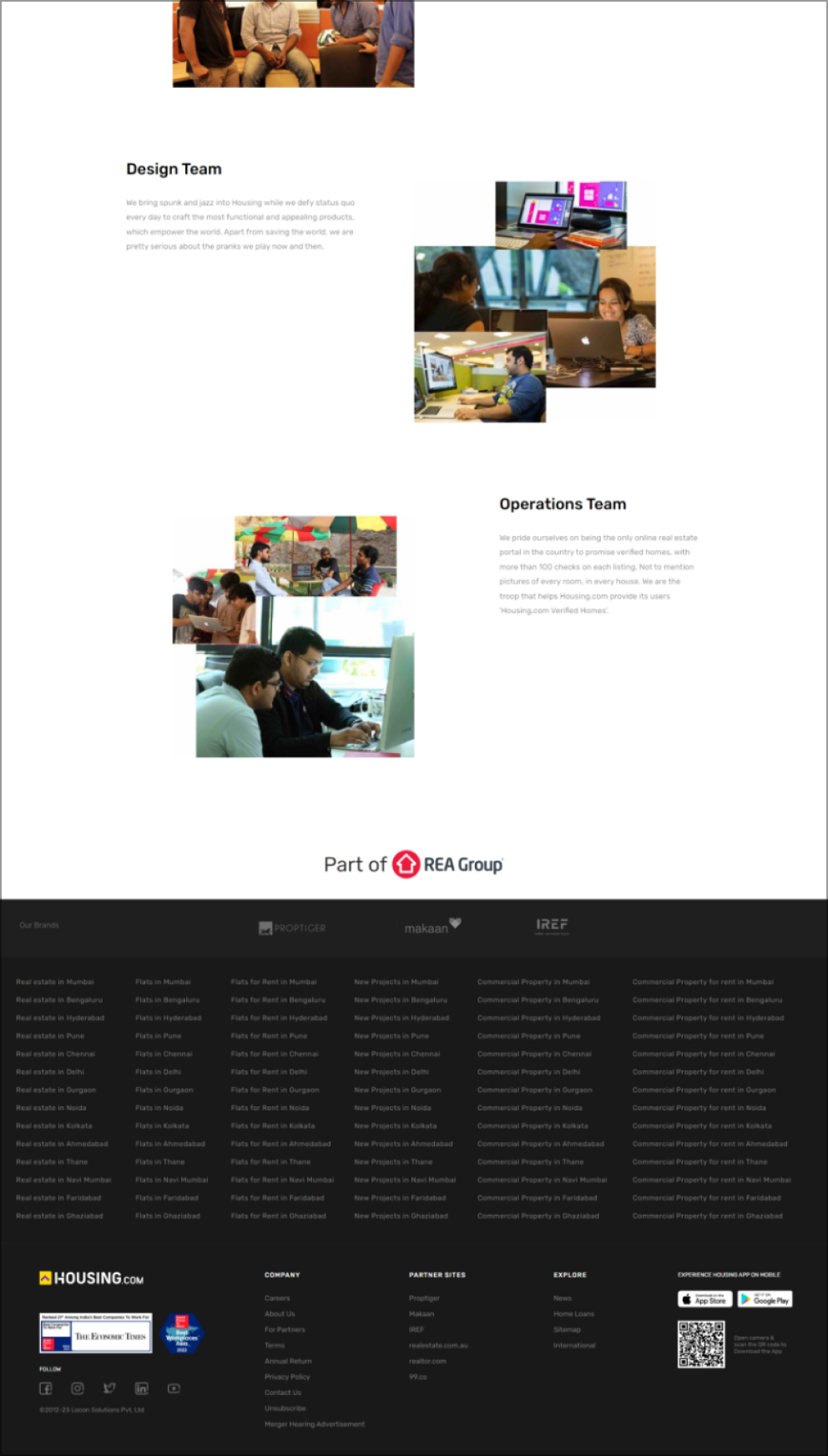
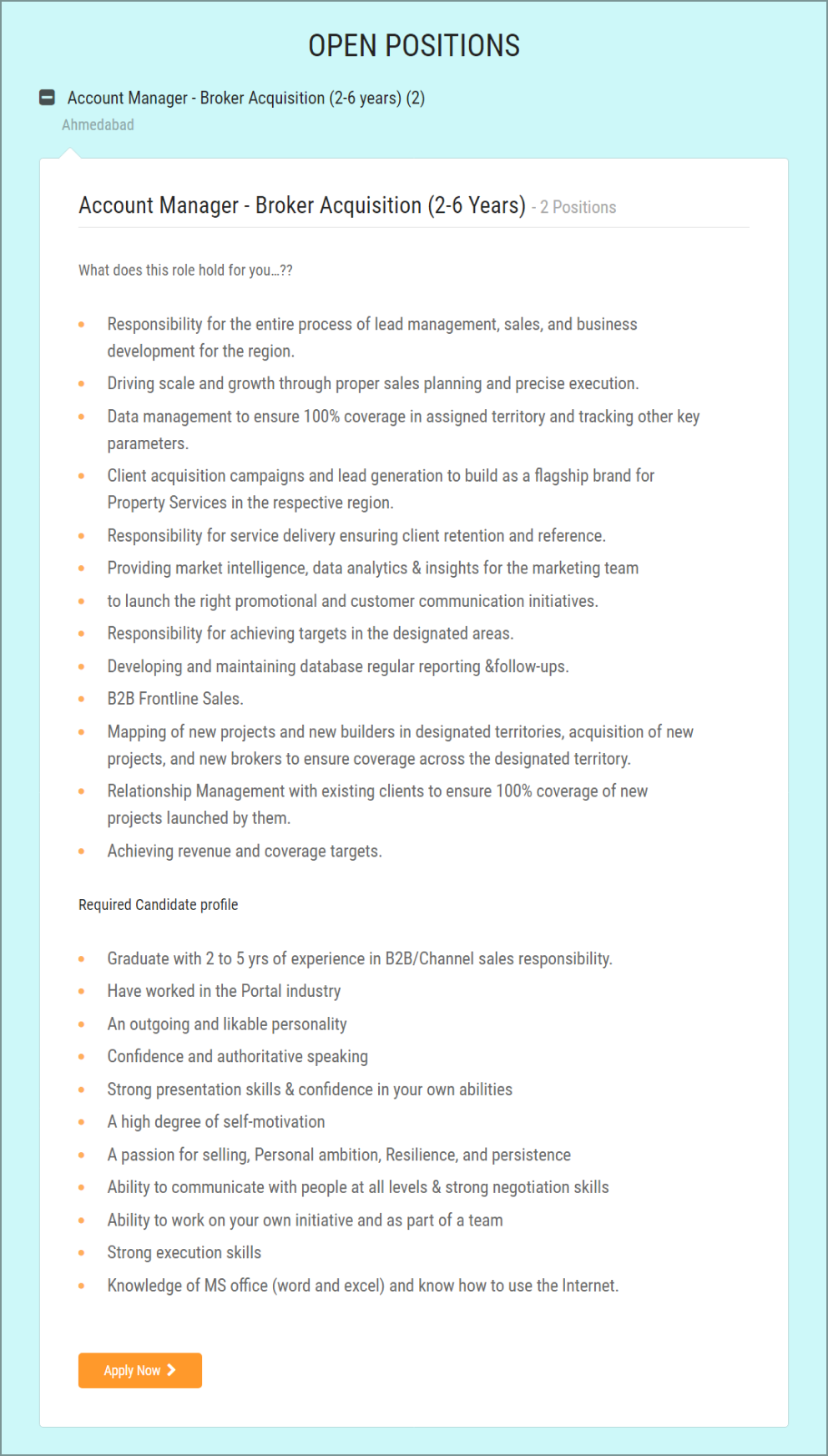







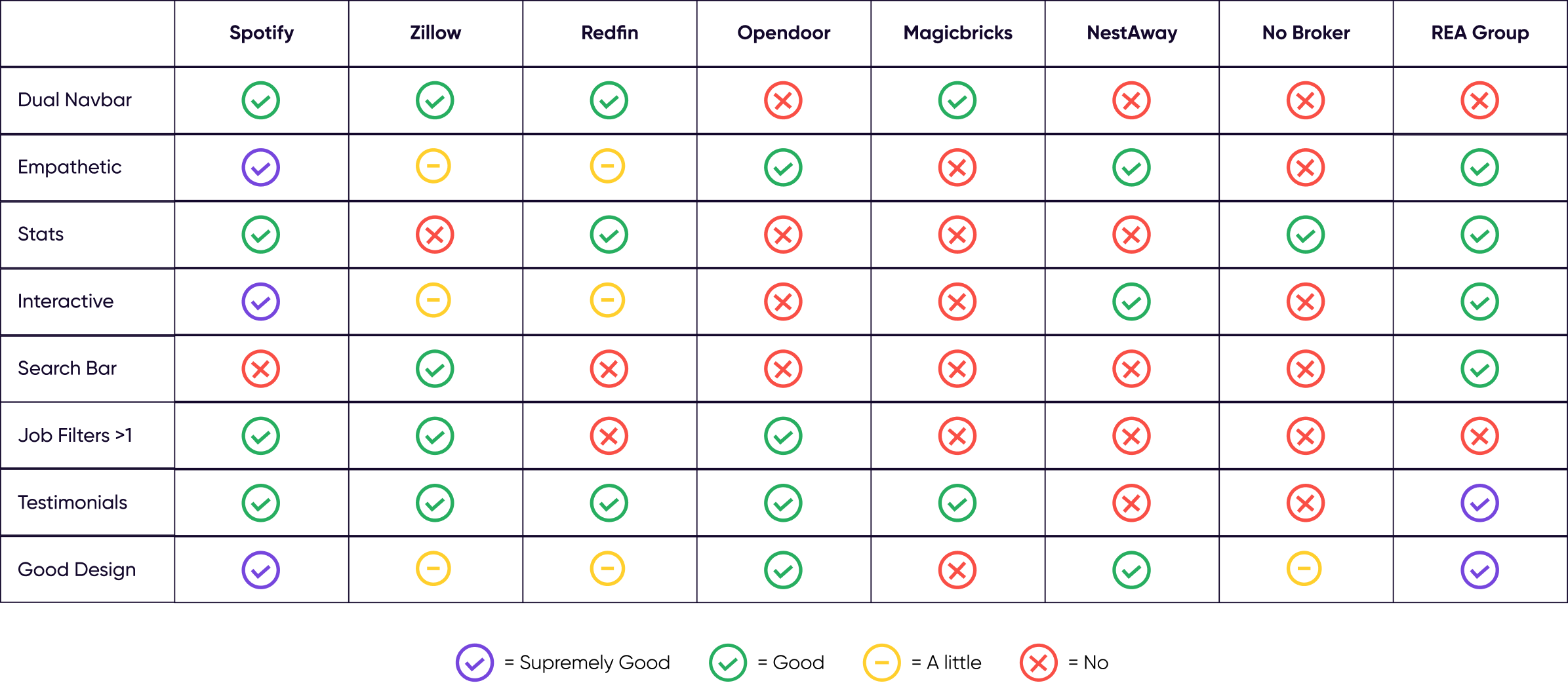




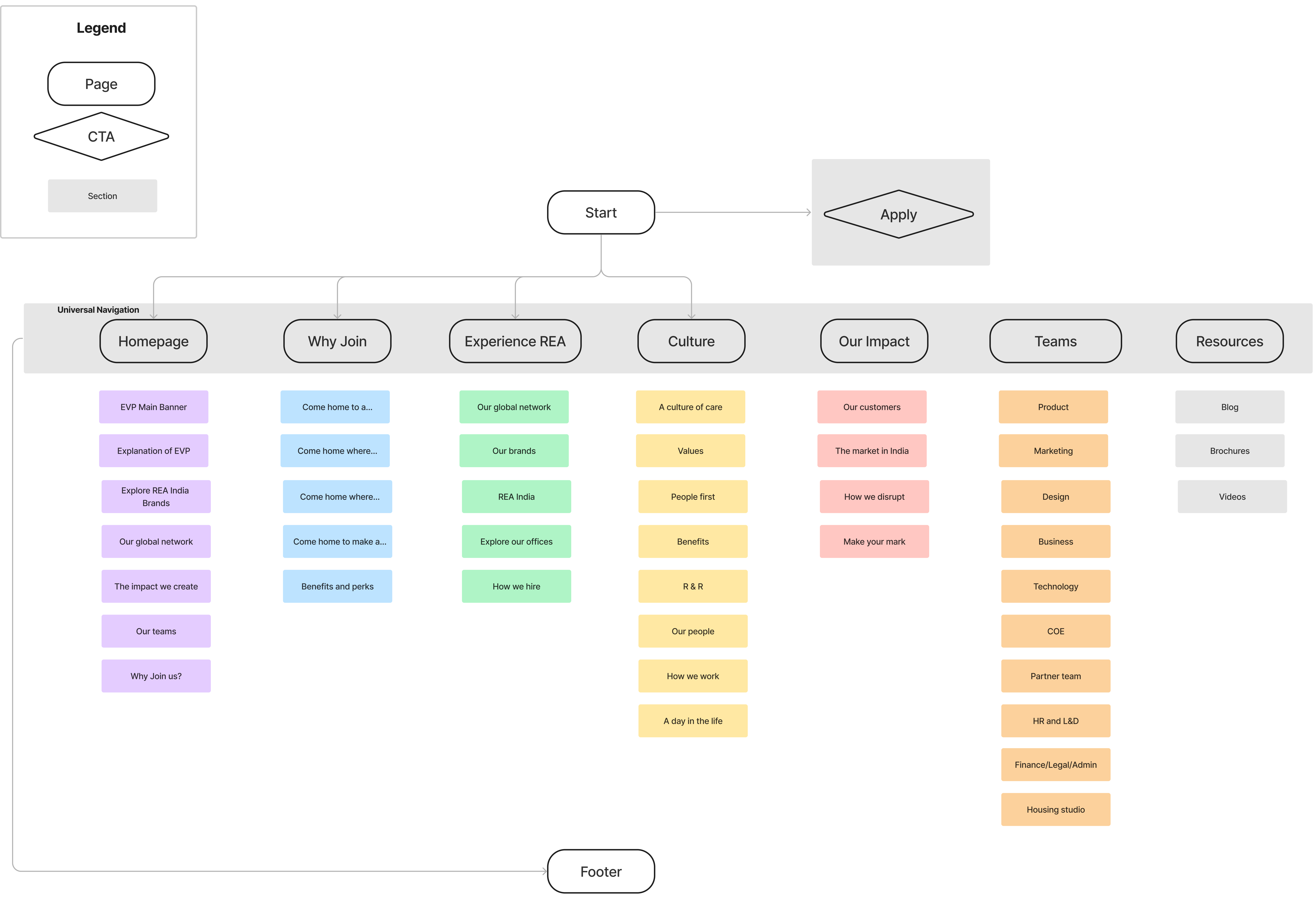
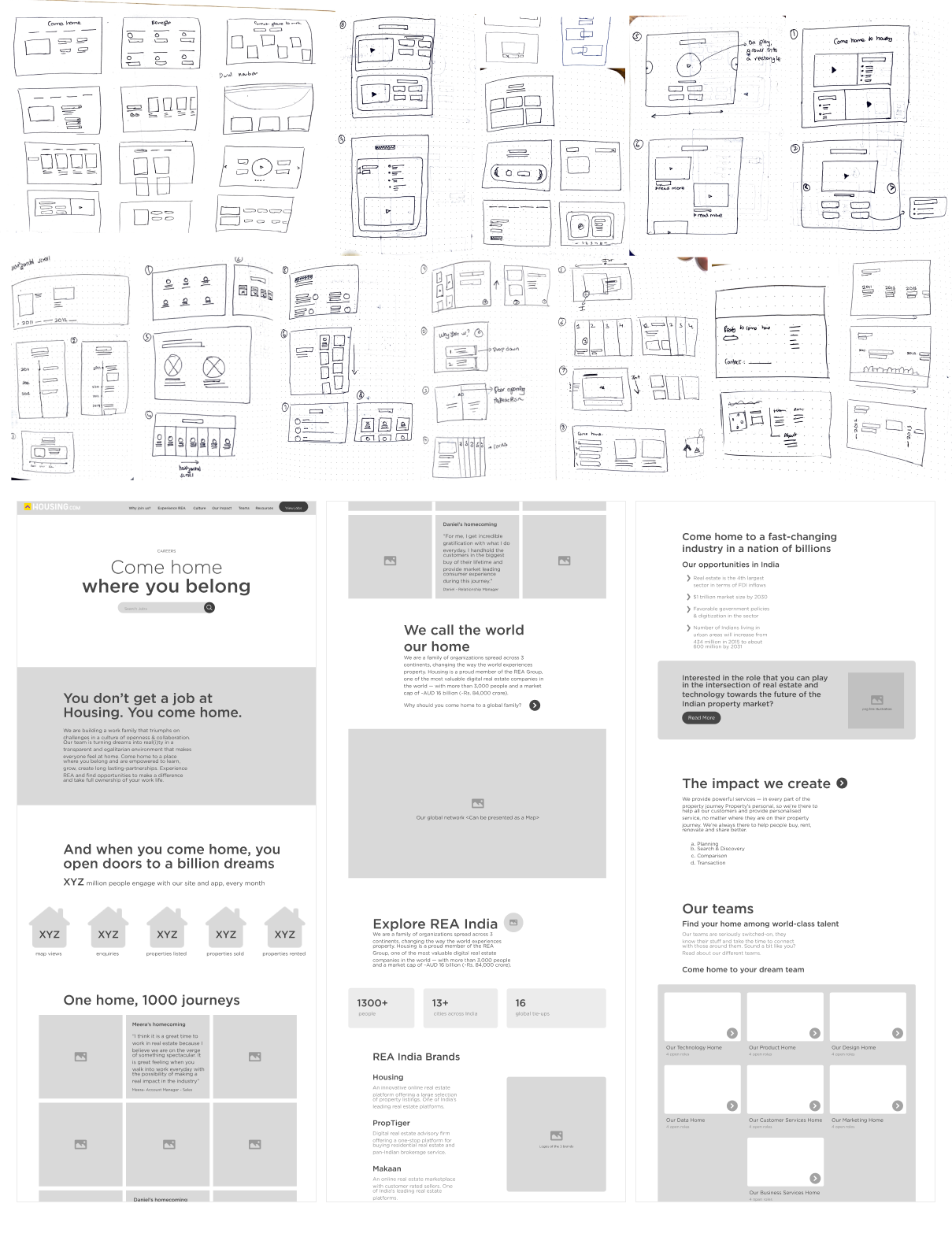
I first made a list of all the website features and information sections I could think of with the target audience in mind.
Next, I bounced ideas with my mentor and the content team to determine their feasibility
We then had a basic idea of what the website should hold and the content creation started.
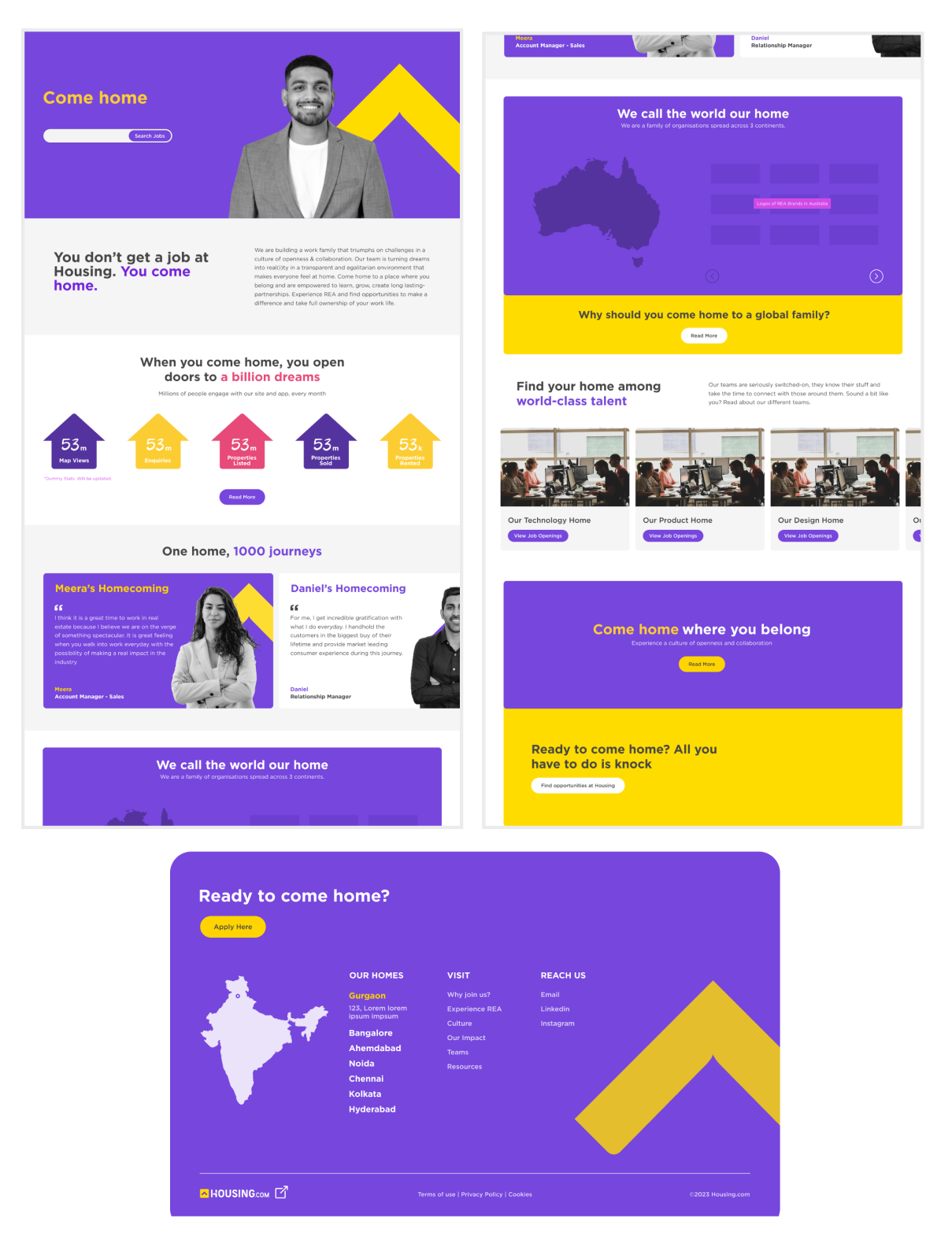
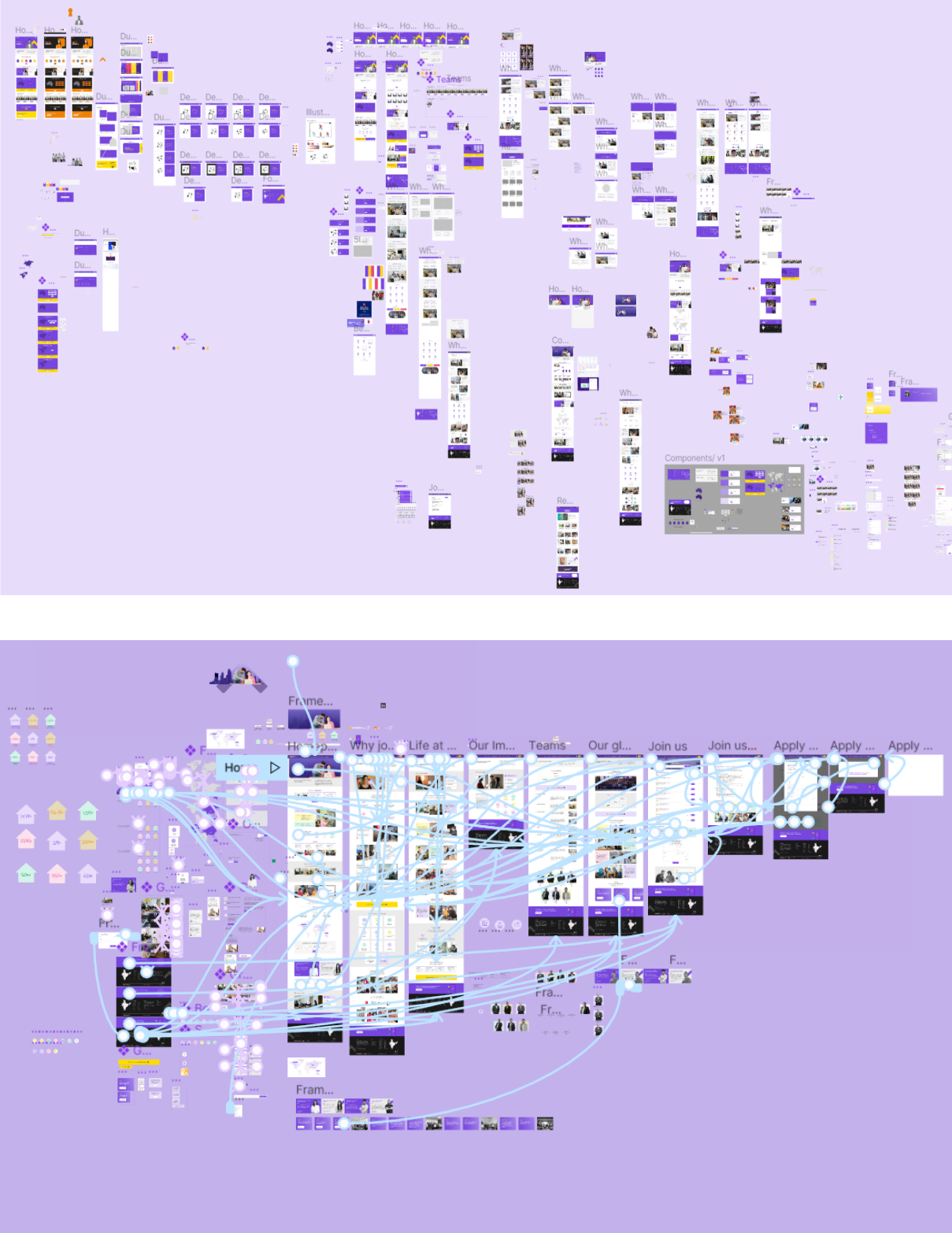
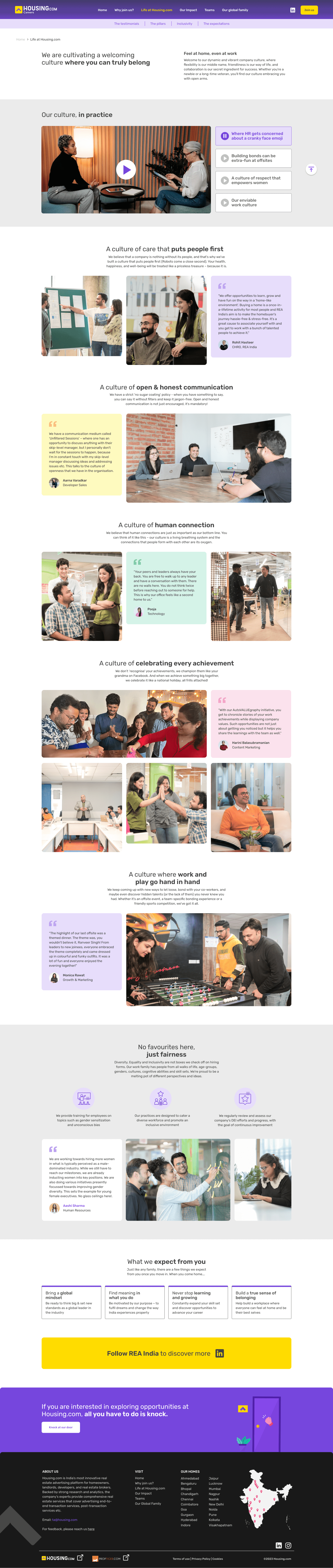
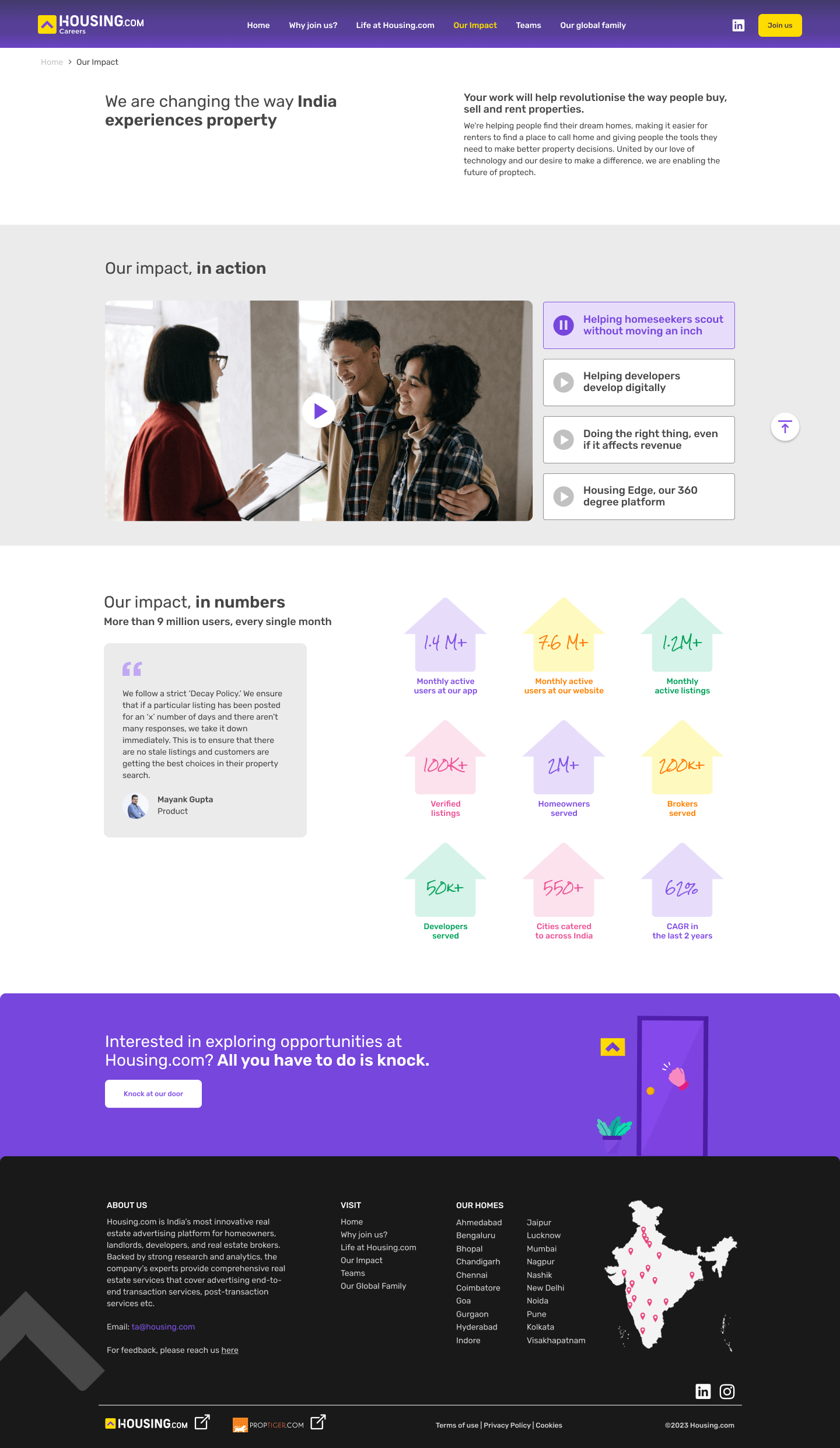
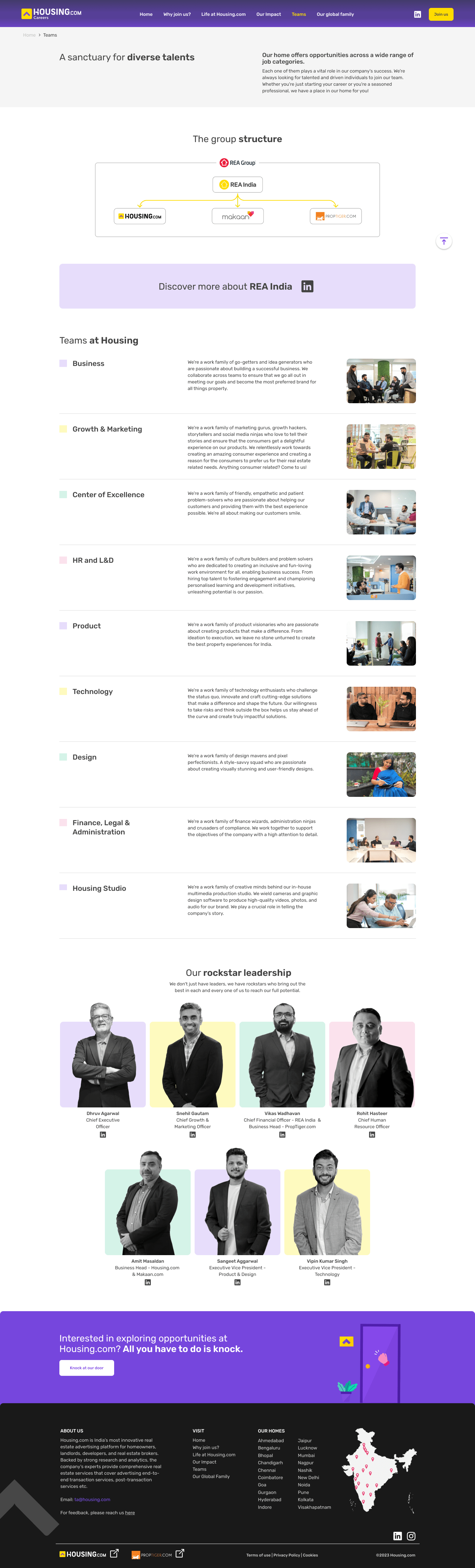
This is roughly how we reached to getting the design approved
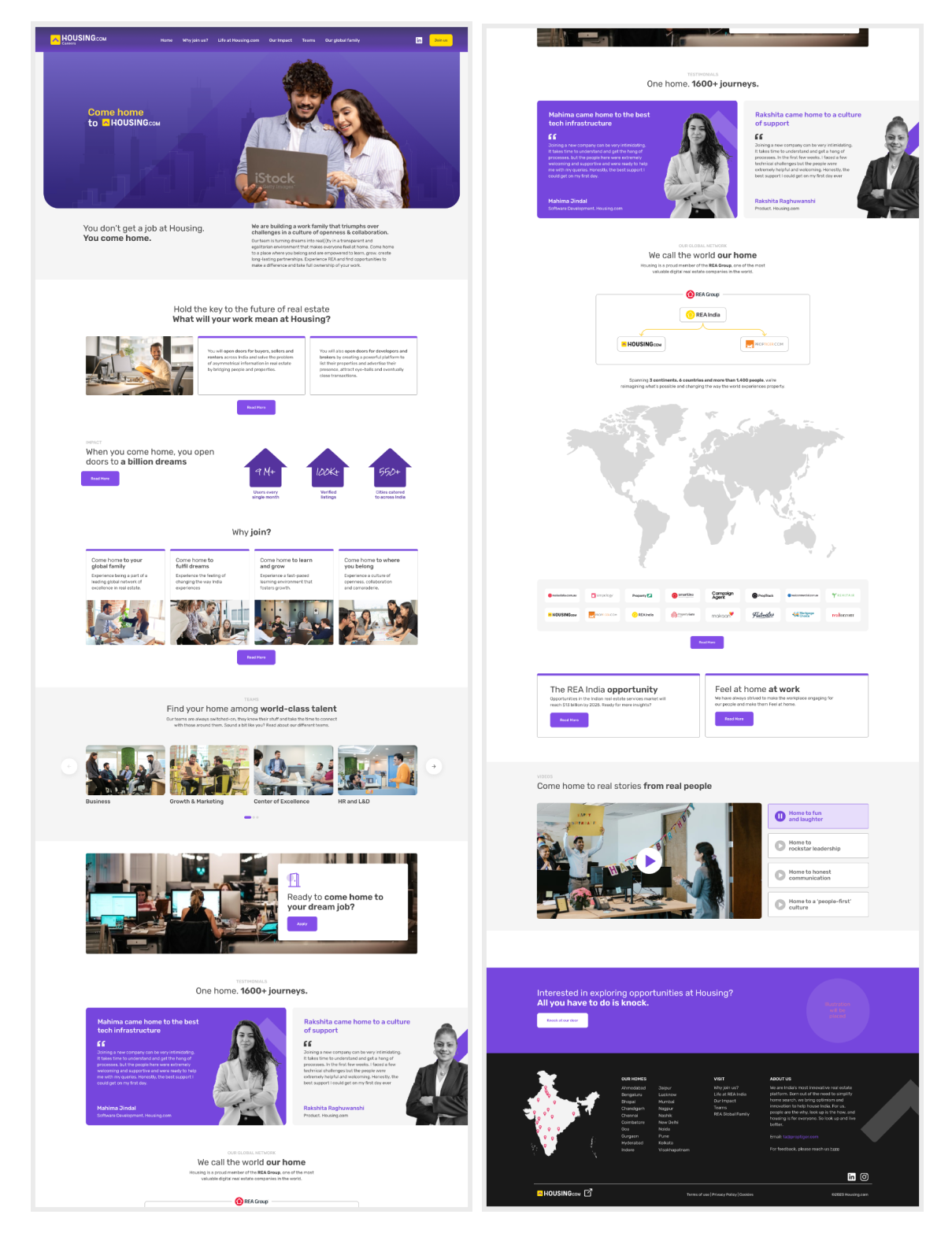
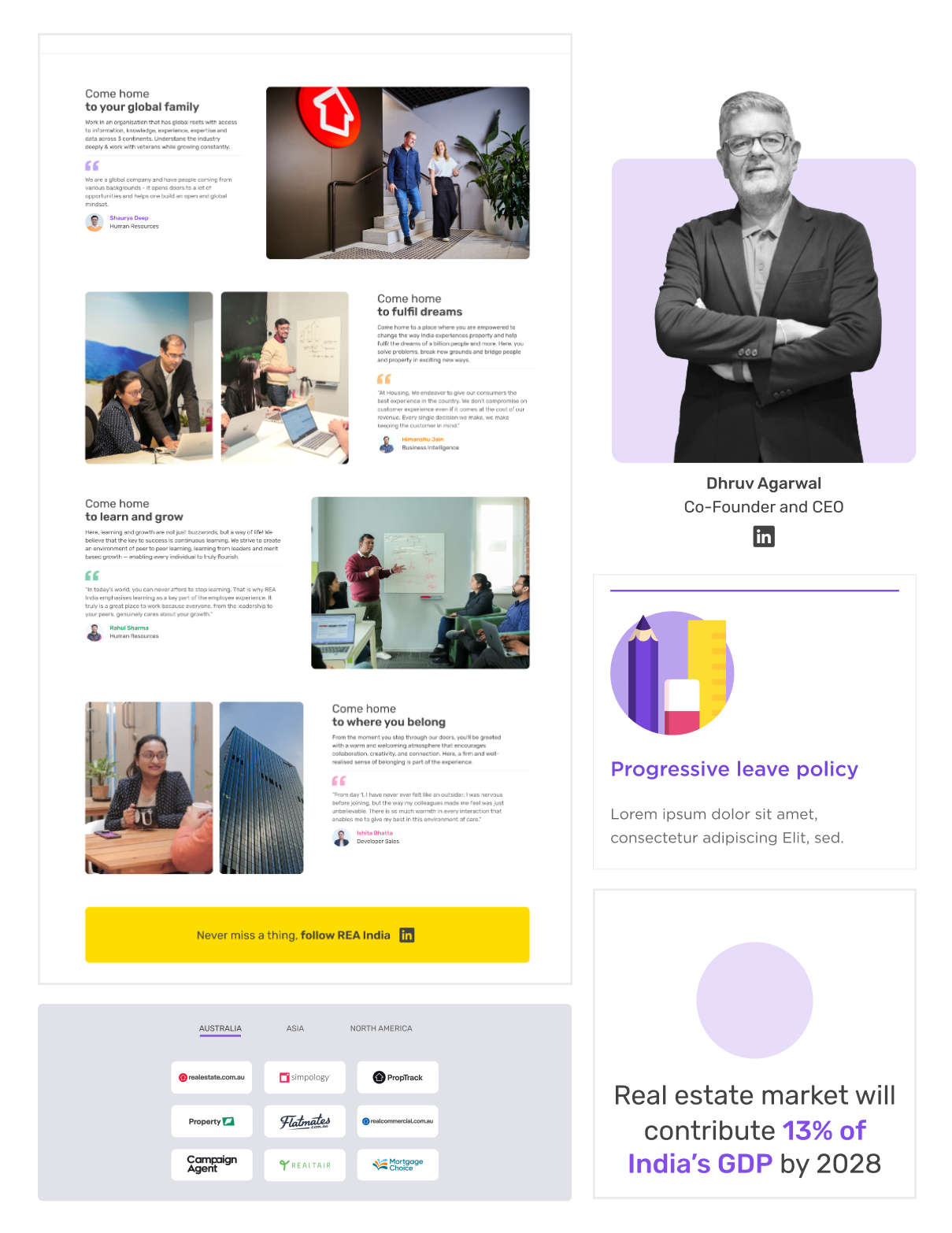
Being an important practice, I decided to conduct pre-development usability testing for the prototype among 8 employees of Housing.com for 30 min each in a remote setting. Here are the top learnings from the user testing which we addressed.

Users expected and wanted to learn about the top management in teams.

The navigation felt a little complicated to the users, especially on the why join page.

Users who have not seen the website before or know of Housing.com and REA might have trouble understanding what each is.

The main CTA button on the navbar received little attention and was thus overlooked.

Filters of different teams on the job board will be helpful.

The user was looking for a clear vision and mission of Housing.com


.png)
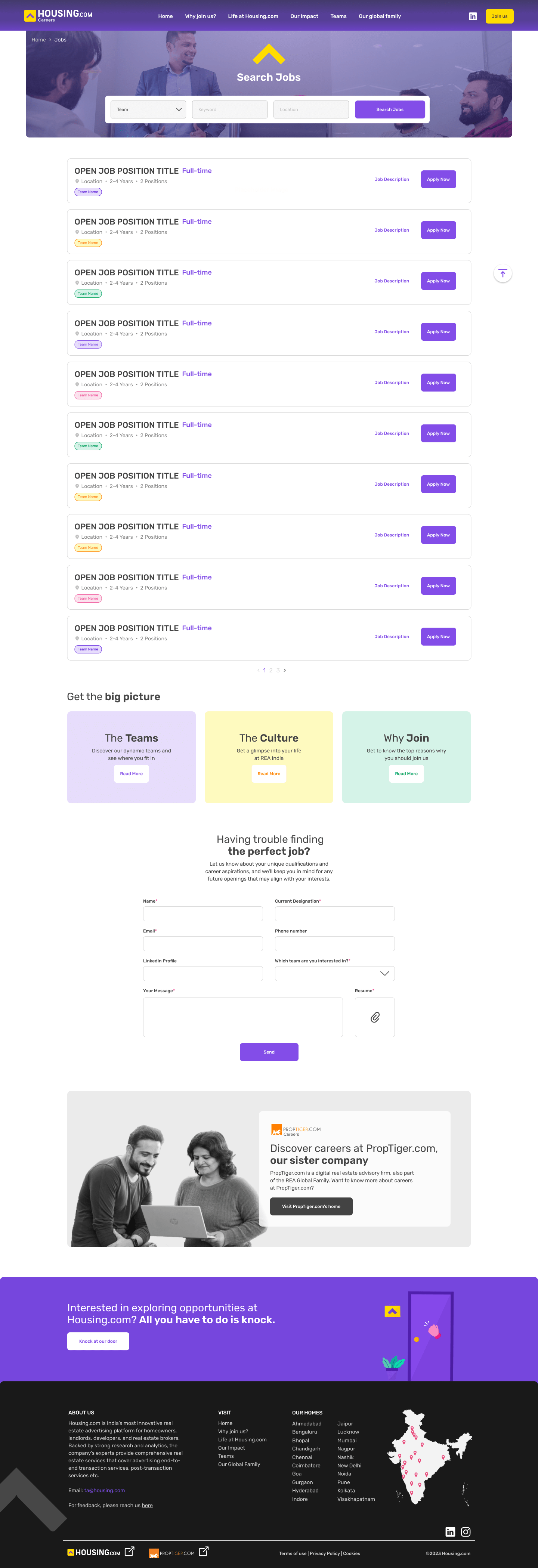
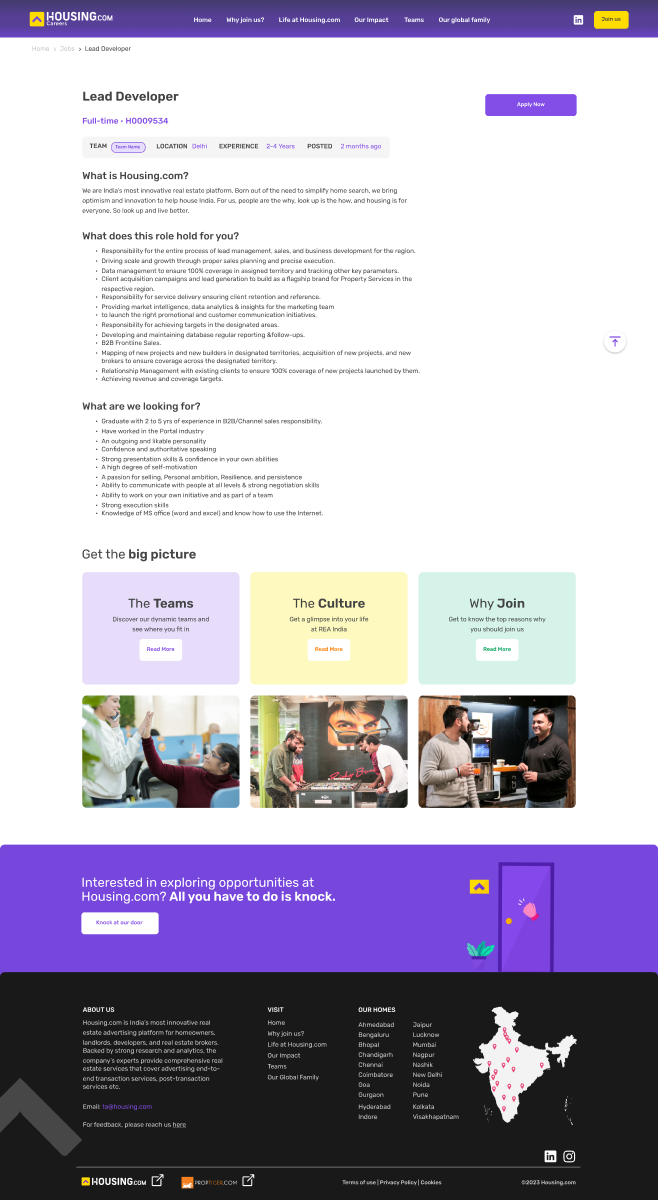
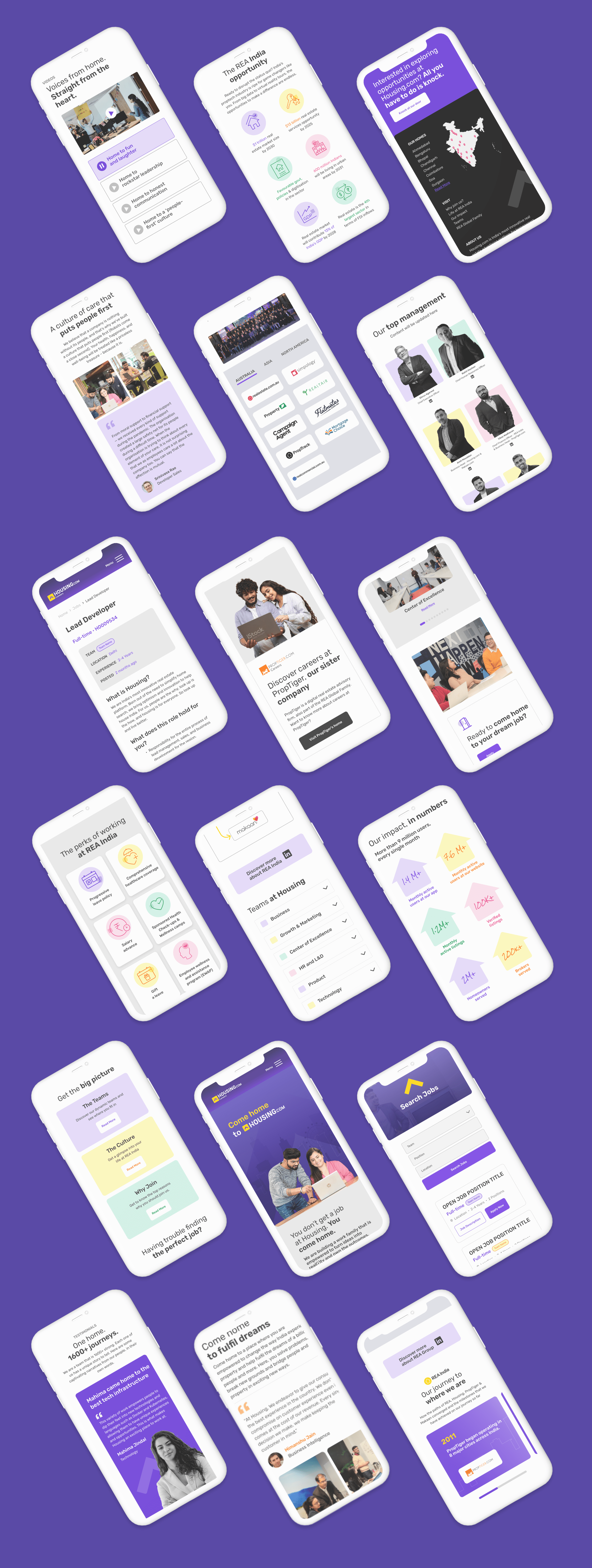
Since a large number of people apply from their mobile phones, it is important to make sure the website is responsive to the smaller screens.
Collaboration is key: I've learned that working closely with clients, stakeholders, and other designers can lead to better outcomes than working alone. By sharing ideas and perspectives, we can create more comprehensive solutions that meet the needs of all involved.
Research is essential: Before starting any design project, I've learned that conducting thorough research is critical. By understanding the user's needs, preferences, and behaviors, I can create more effective designs that resonate with the target audience.
Testing leads to improvement: Through user testing, I've learned that even the best designs can be improved. By gathering feedback and insights from real users, I can make data-driven decisions that lead to better outcomes.
Embrace iteration: I've learned that iteration is a natural part of the design process. By embracing the feedback loop and being open to making changes, I can create designs that continuously improve and evolve over time