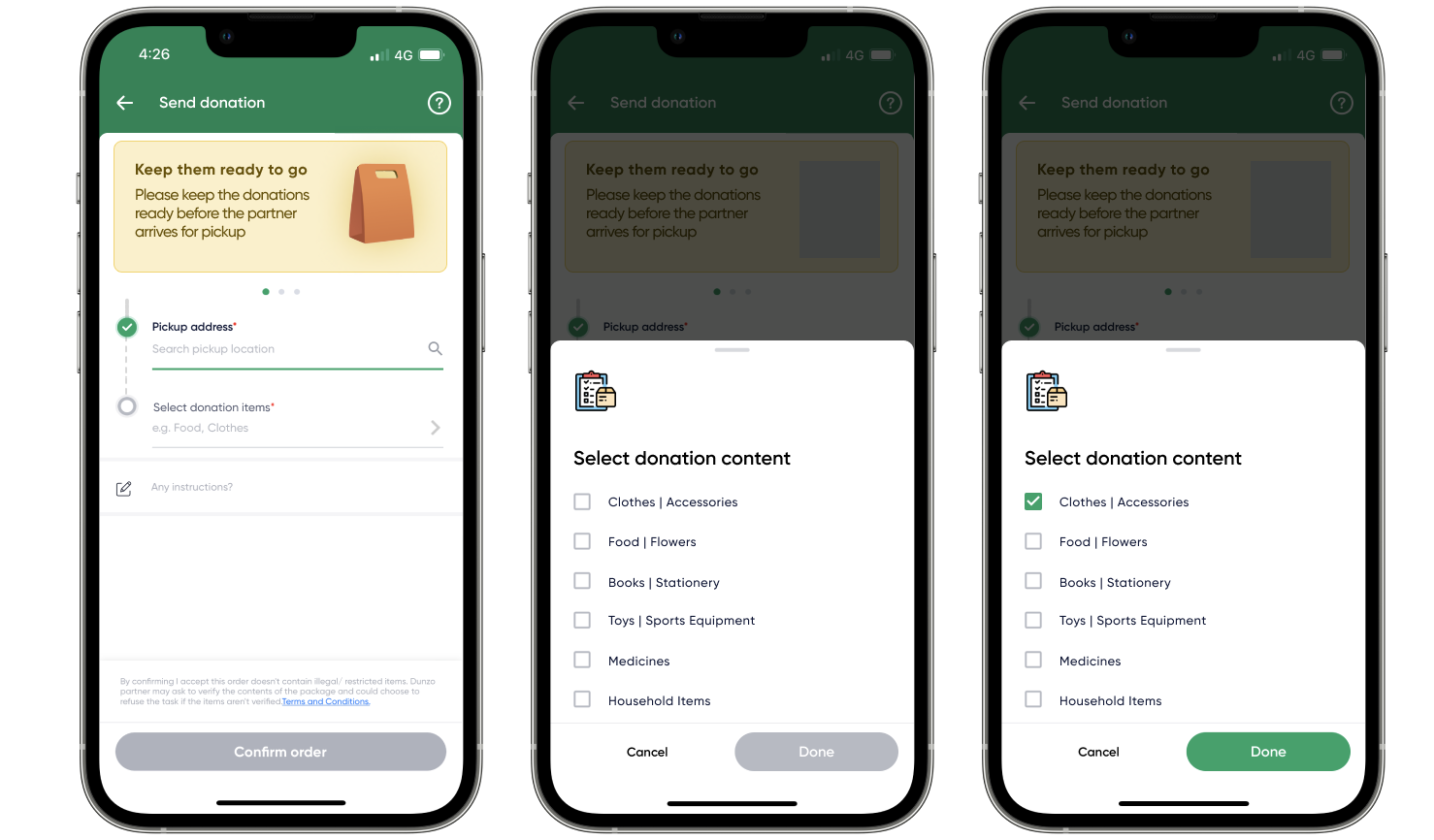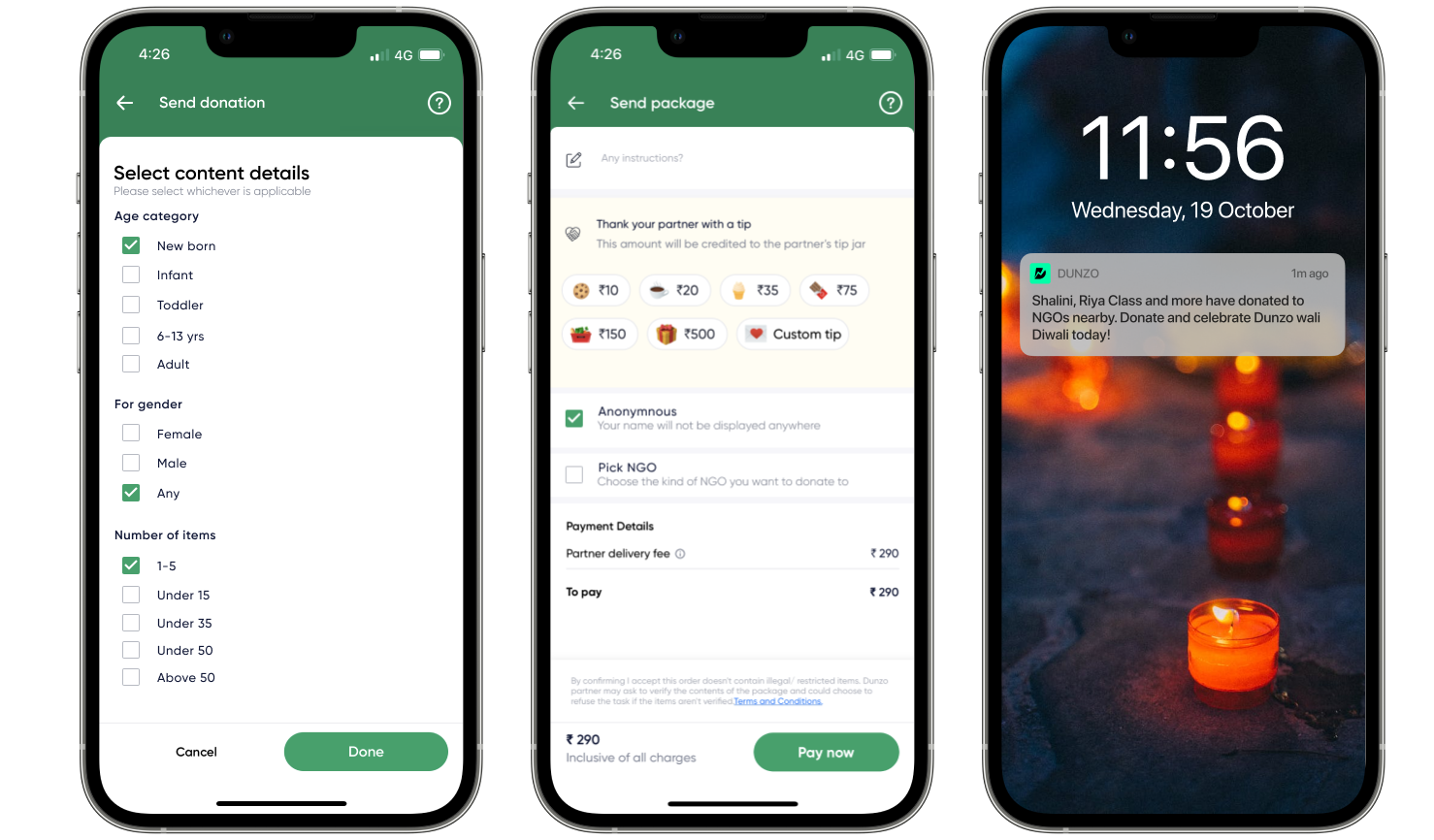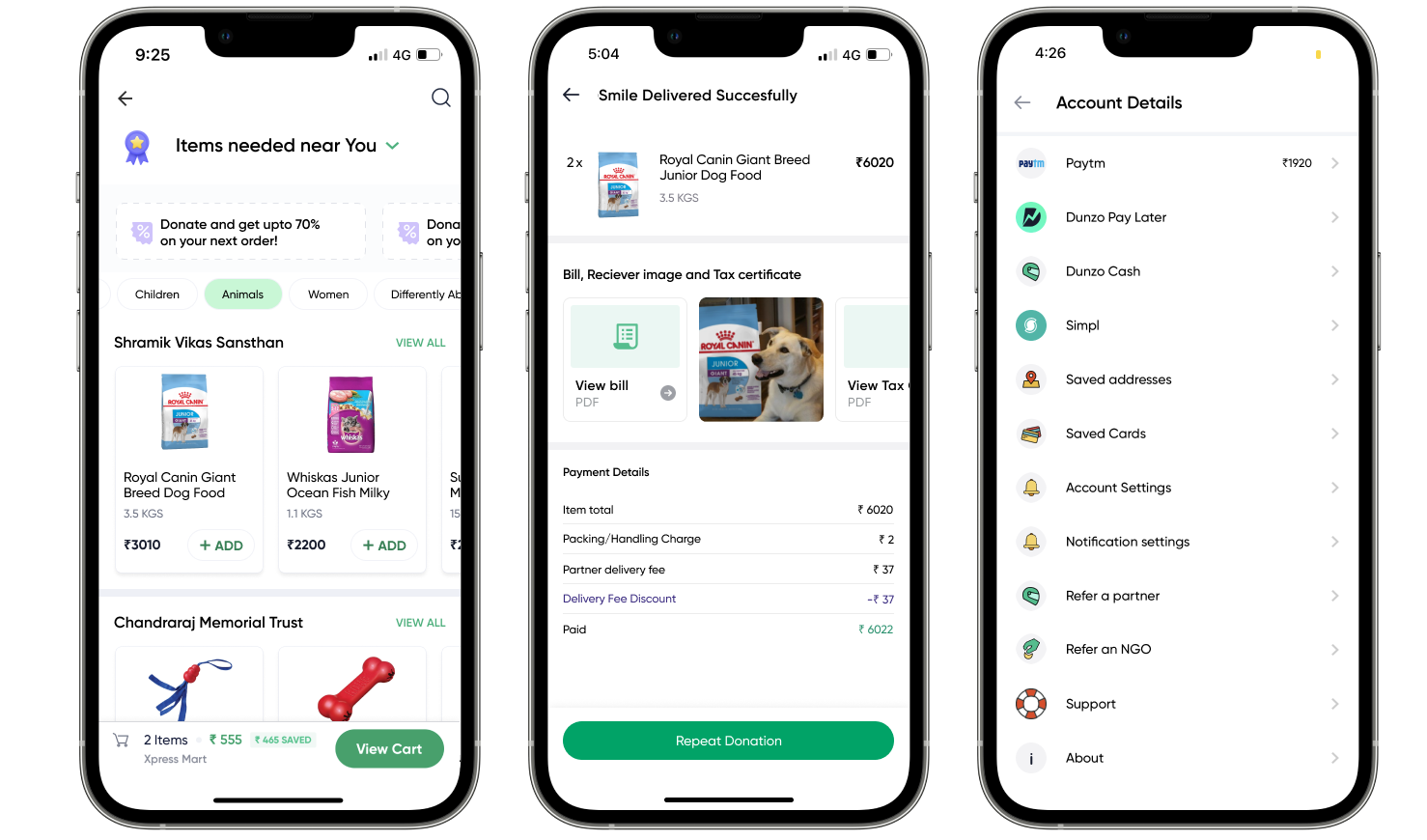



It all started with my friend Shivani leaving the city with a ton of clothes to donate. She struggled to find people who needed them and unfortunately, time wasn't on her side. This got me thinking, there had to be an easier way to donate. And that's when the idea of Dunzo for donations struck me.
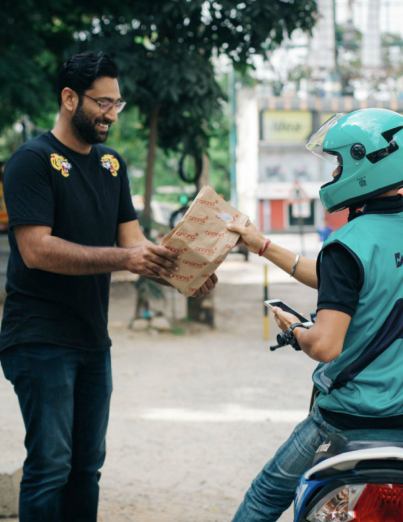

5/11 users distrust the cause and platform due to negative experiences, platform unfamiliarity, and uncertainty about where their donation goes.

Orphanages, temple, schools, old age homes
and animal shelters are the top 5 places people donate at.

3.5/5 is the average rating for the ease of finding people in need of donations.

People make donations in three ways: at random, on birthdays/ anniversaries, and during festivals.

Clothes, money, food, books and toys are the top 5 most commonly donated items.

41.8% would like to donate their own belongings, 25.4% items from the store and 33.2% don't mind any.

Dunzo wins its users through moment marketing mainly on social media.

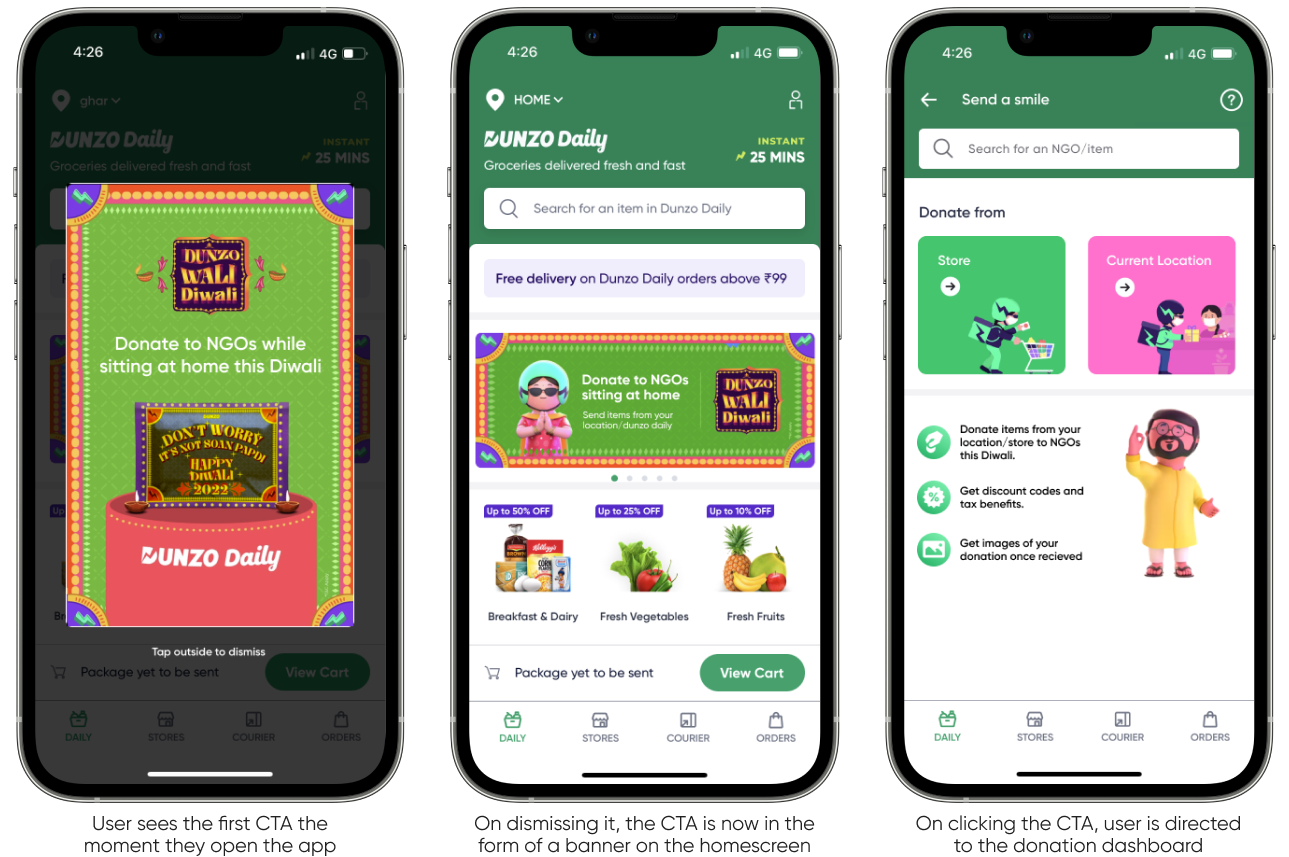
Almost all brands create an emotional advertisement video as a Diwali campaign, but only a few execute impactful physical campaigns.

NGOs occasionally receive items they do not require and must discard. Therefore, proper matchmaking between them and donors is essential.

Donors have varying motivations, such as to get rid of excess items, belief in karma, some to feel good, and some to save money on taxes.
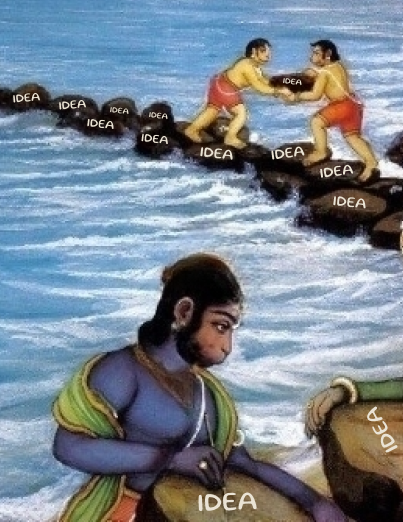
I jotted down every idea that came to me and put them in front of me.
Debated and evaluated on what ideas will work the best for Dunzo's values & audience.
Then evaluated the shortlisted ideas based on factors like feasibility & potential impact.




How can this new data be used by Dunzo?
What are the exact features that have to be embedded?
Who are the stakeholders here?
How will the algorithm work for the delivery agent once he receives the donation?
How many users can be impacted due to this, both on the giving and receiving side?
Will the user get help if buying an item i.e. inform them what item is in need by the NGOs in their surroundings?
Who exactly will the delivery go to once the executive reaches the NGO?
What are the things that can go wrong?
How can the users be motivated to donate?
How does Dunzo get the NGO database?
Will this feature change/lose the current voice of Dunzo?
How does the matchmaking between users and NGOs happen?
How much control do the users get in choosing where the donation goes to
Can this be gamified?
What is the process to claim tax returns for donations?
Should the NGOs have ratings?
What are the categories of NGOs Dunzo is going to cater to?

Established trust
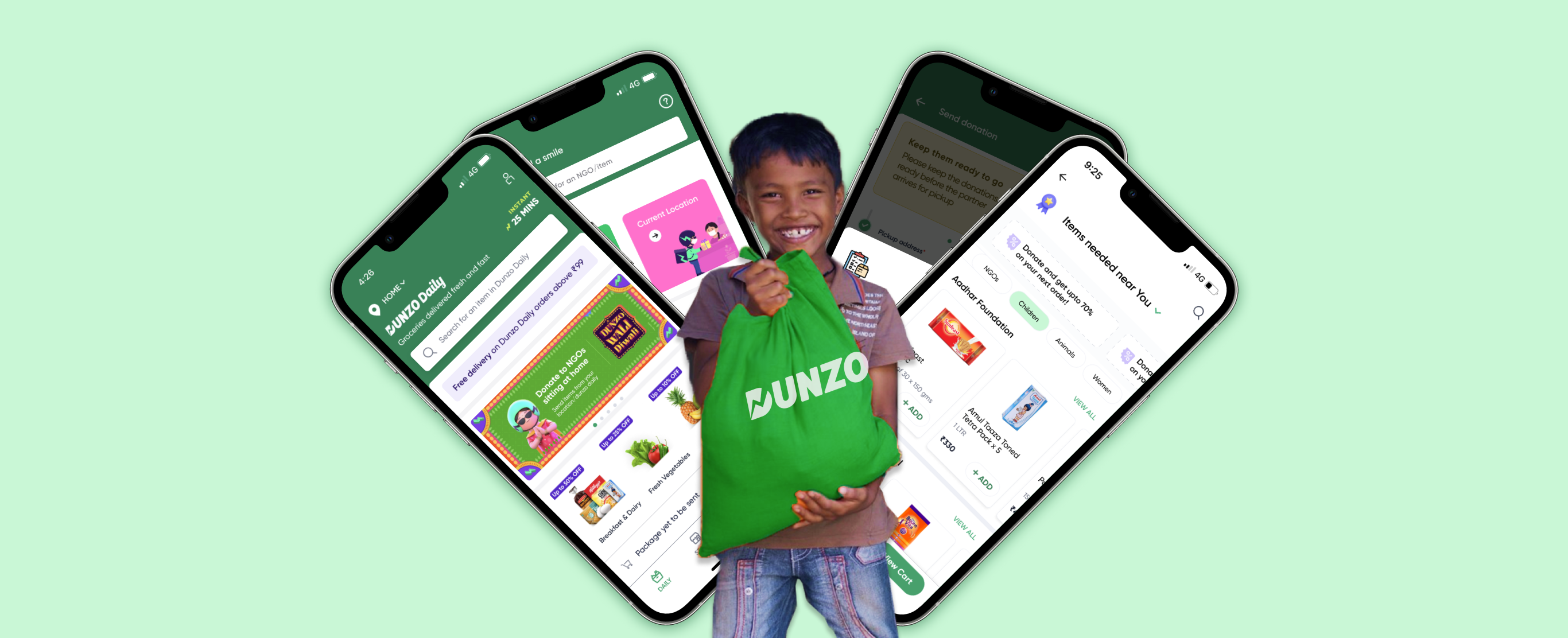
Dunzo has 3.4M+ users and growing, making it easier to execute and gain trust for campaigns.
Dense logistics
With over 11,000 delivery partners, execution becomes more efficient and rapid.

Assures the donor
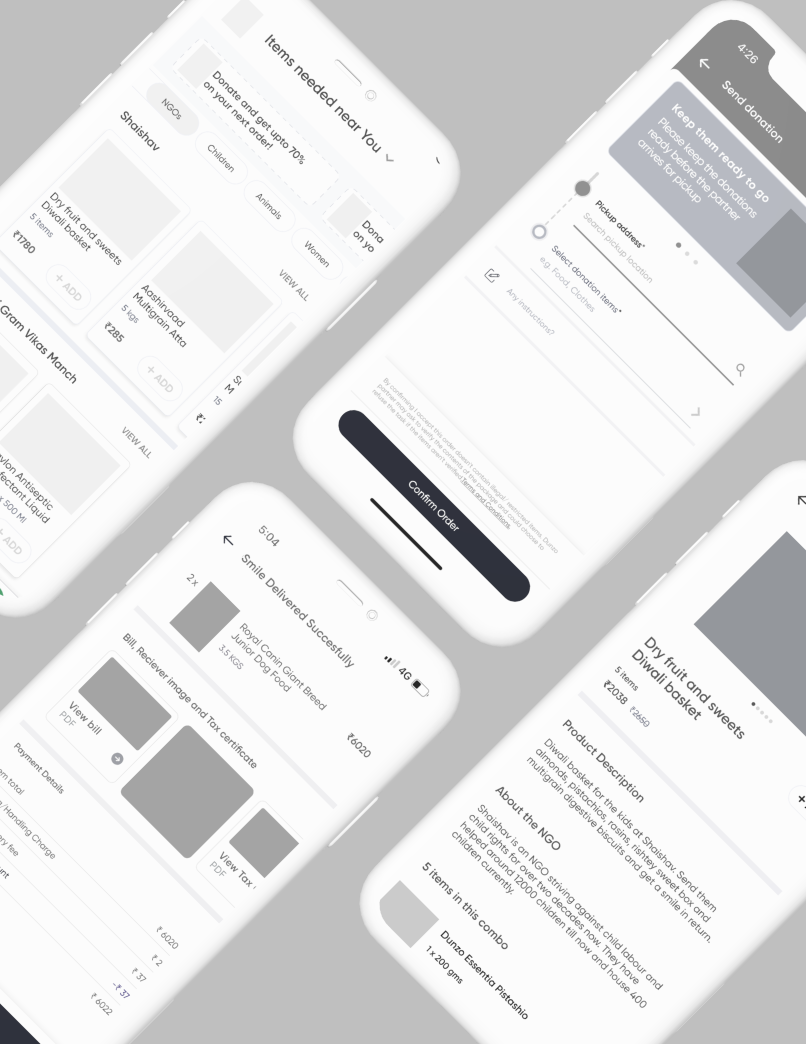
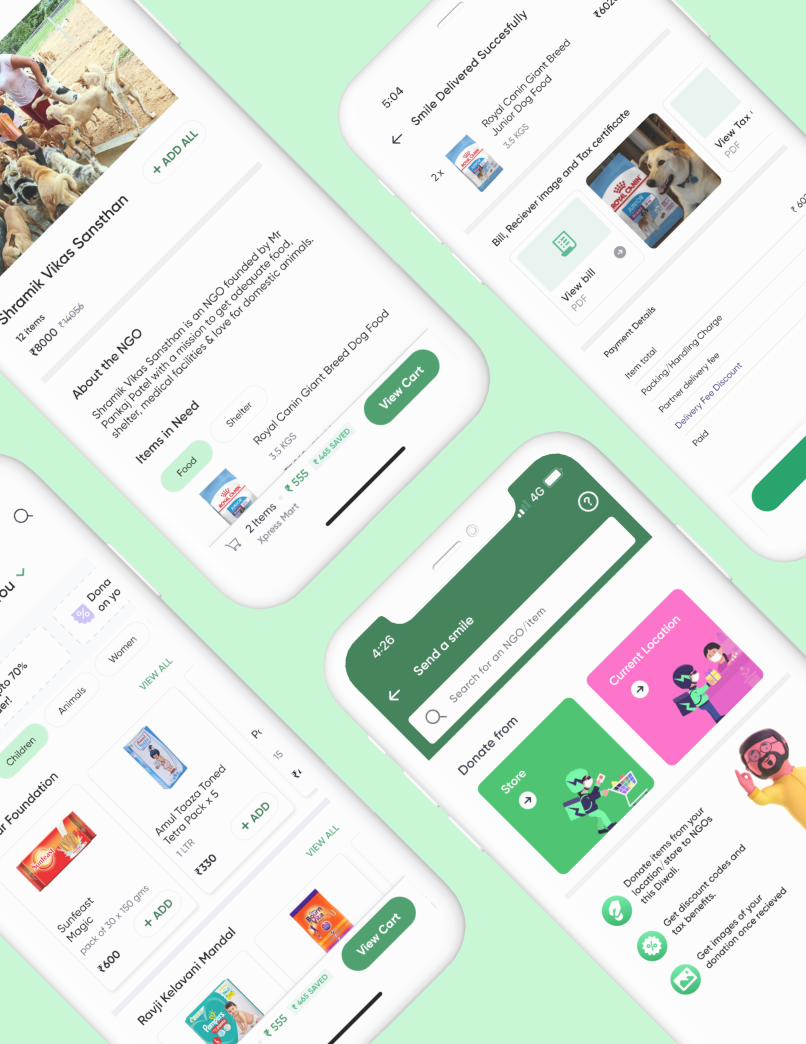
Receive pictures of the recipient sent from the delivery partner.
Enables donation in kind
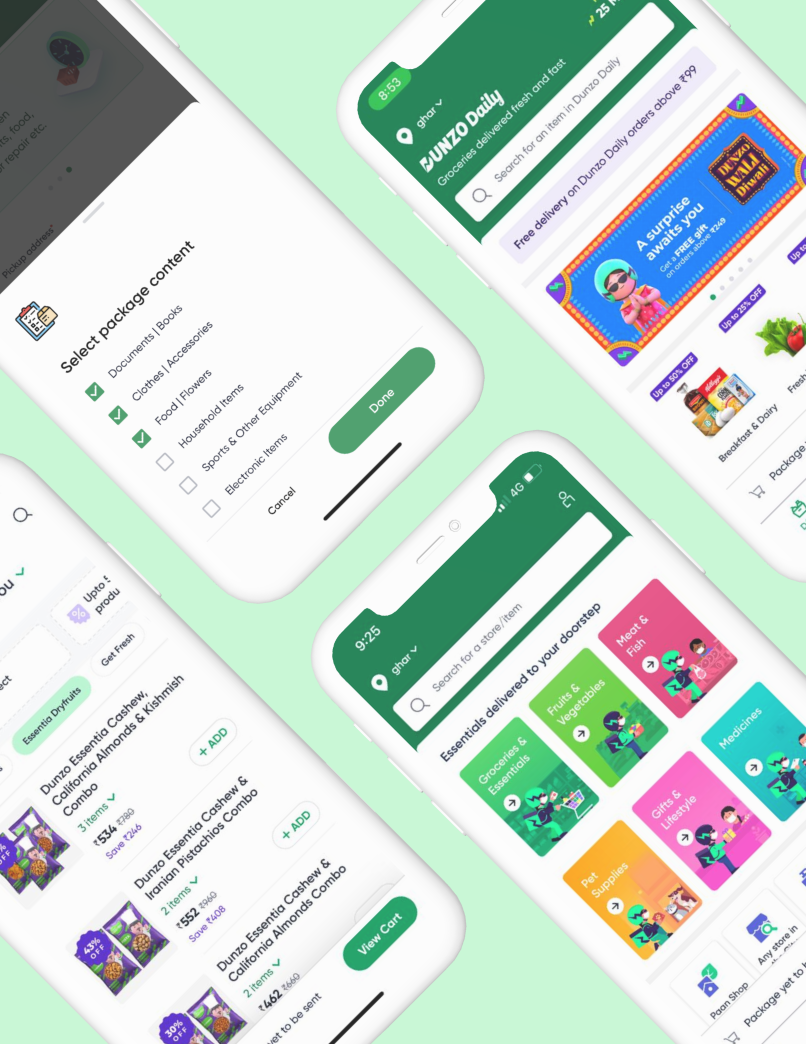
Unlike other competitors, Dunzo accepts non-monetary donations such as food and clothing.
-poster-00001.jpg)